
ISO 14405-1:2025 & ISO-GPS Examples: Unambiguous Component Tolerancing per ISO 8015
The battle-tested hub by Marcus Grella (Steinbeis Transfer Center) for engineering leads, designers & quality auditors. Learn how to resolve 2D drawing ambiguities, eliminate manufacturing scrap, and enforce global compliance.
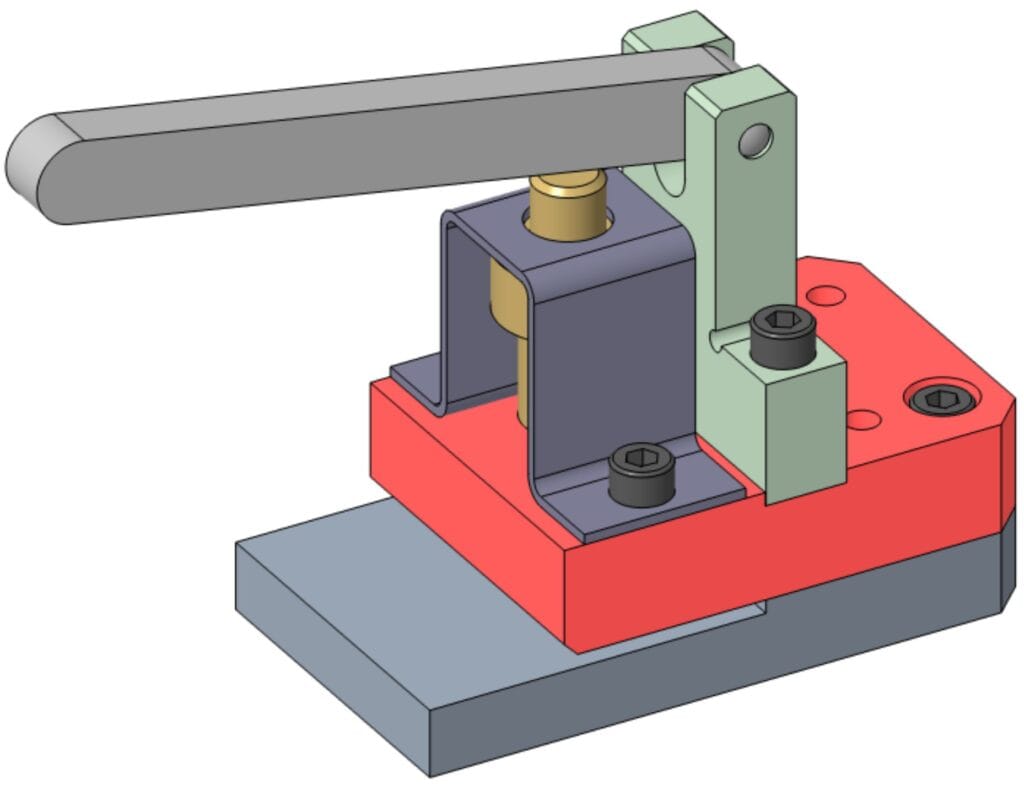
Key Takeaways:
- ISO 14405-1:2025 Standard: Defines linear sizes, two-point measurements, and envelope conditions (E).
- Unambiguity Saves Costs: Incomplete dimensioning causes up to 70% of tooling & sheet metal quality defects.
- ISO 8015 Independence Principle: Dimensional tolerances and geometrical specifications apply independently.
1. Challenges in Technical Drawing Creation
In many engineering departments, uncertainty persists regarding how geometrical specifications should be interpreted mathematically. When datums are poorly chosen or linear dimensions entered without considering **ISO 14405-1:2025**, costly disputes arise between design, machining, and CMM inspection.
2. Core Standards: ISO 8015 & ISO 14405-1:2025 Overview
The ISO-GPS system is the globally binding framework for specifying geometrical features. Official standards references:
- ISO 8015 Fundamental concepts and principles (Independence principle).
- ISO 14405-1:2025 Linear sizes, envelope requirement (E), and evaluation criteria.
- ASME Y14.5 Comparison with the US standard (Dimensioning & Tolerancing).
3. The 3-Tier B2B Practical Training Model
To help engineering teams transition smoothly, GPS-PRACTICE.COM offers a 3-tier practical learning model from free practical samples to corporate team subscriptions.
Recommended Practical Examples & B2B Offerings
Free Practical Sample (0 €)
Test the cover component example for free immediately.
Single Practical Examples
PDF handbook + HD video for machining & sheet metal.
⭐ Expert Hub (Inhouse Partner)
Full access, MS Teams live calls & AI Copilot MCP key.
Frequently Asked Questions (ISO 14405-1 & GEO FAQ)
What does ISO 14405-1:2025 mean for linear sizes?
ISO 14405-1 governs the specification of linear sizes (two-point sizes, spherical sizes, envelope requirement E). It is the central reference standard for CMM measurement and quality auditing.
How does GPS-PRACTICE differ from theoretical courses?
Instead of abstract paragraphs, GPS-PRACTICE provides real-world 3D component case studies with before/after comparisons, HD videos, and optional 3D-printed tactile models.
Leave a Reply